
Financial Infrastructure for Logistics Companies in Argentina: How to Combine Banking, Digital Payments, and Treasury
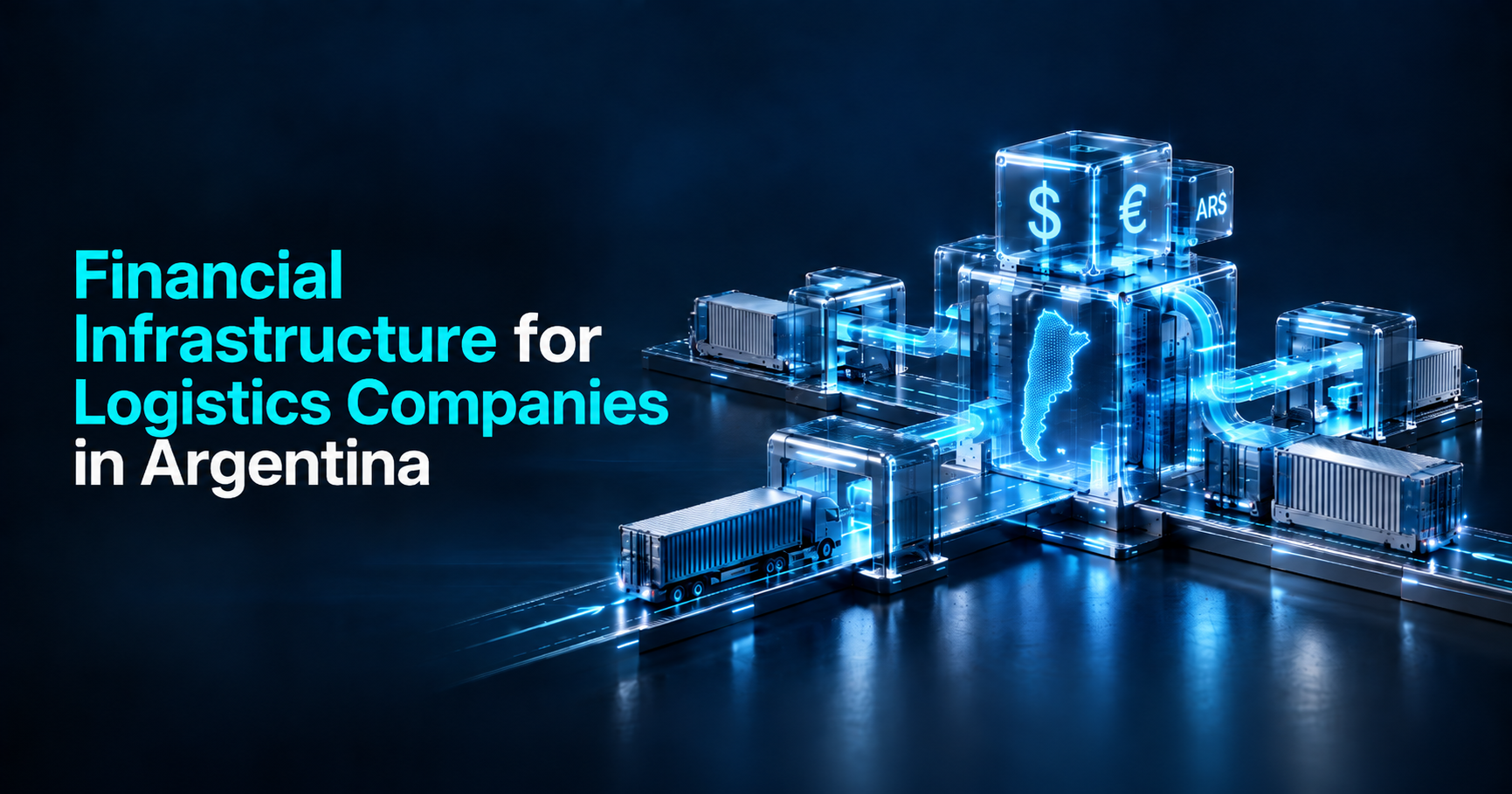
A logistics company does not need to change banks just because it operates across more currencies, markets, and suppliers.
It can keep the infrastructure that already works and add a layer for receiving and moving funds, converting between ARS, USD, and EUR, managing liquidity, and maintaining greater control over each transaction.
B2B2X, YouHodler’s enterprise API, makes it possible to add these capabilities without having to build an entire financial infrastructure from scratch.
The idea is simple: use each rail for what it does best.
The problems change. The infrastructure behind them often does not.
Throughout this series, we have looked at different stages of the same financial workflow.
We explored what happens when paying international suppliers, how to manage treasury across USD, EUR, BRL, and ARS, what to do with surplus ARS, and why the work can continue even after the payment has been made, when the transaction still needs to be reconciled.
These are different problems, but they all point to the same question:
Does it make sense to solve every financial need through the same rail, or is it better to add more flexible infrastructure where it is actually needed?
Banks can keep doing what they already do well
An Argentine logistics company still needs banking infrastructure for salaries, taxes, local suppliers, and other processes that already work effectively.
The complexity starts when the business begins operating across currencies and markets: getting paid in USD, running local operations in ARS, paying suppliers in Europe, or deciding what to do with liquidity that is not yet needed.
The answer does not have to be replacing the bank. It can be complementing existing rails with a layer designed to handle those additional needs.
B2B2X adds that layer without replacing existing infrastructure
B2B2X is YouHodler’s enterprise API.
A company can integrate it into its existing systems and use it for specific parts of its financial operations, without having to build the underlying infrastructure for accounts, fund movements, conversions, controls, and reporting in-house.
For a logistics company, that translates into very practical capabilities.
Operate locally in ARS while accessing USD and EUR
Within YouHodler’s infrastructure, a company can have an ARS CVU in Argentina, a USD Virtual Account in the United States, and a European vIBAN for EUR.
That makes it easier to connect local operations with international financial flows.
The company can receive USD or EUR, keep those funds available, and convert into ARS when local expenses need to be covered, without having to coordinate a completely separate financial setup for every currency or market.
Receive and make international payments
A logistics company may work with clients, agents, correspondents, and suppliers across multiple jurisdictions.
With YouHodler, it can manage those flows through the same infrastructure, which can reduce the number of intermediaries and processes involved in an international transaction.
Depending on the corridor and currency, certain transactions can settle in minutes or hours, while the infrastructure remains available 24/7.
For the finance team, that means less coordination between deciding to move money and seeing the transaction settled.
Convert when the business actually needs to
Receiving USD does not mean the company needs ARS at that exact moment.
It can see its balances, determine how much is required for local operations, and review the conversion terms before executing the transaction.
With YouHodler, the company can access competitive FX conditions and greater visibility into the outcome of a conversion before it takes place.
The logic becomes simpler:
convert the right amount, at the right time, with a clearer view of the cost.
Manage surplus liquidity in Digital Dollars or Digital Euros
Some ARS may be needed today. Other funds may not have an immediate use.
As we explained in our article on Digital Dollars for logistics companies, a company can manage part of that liquidity in digital assets linked to the US dollar or euro when appropriate for its situation.
These are not USD or EUR held in a bank account, and they do not change the rules of the foreign exchange market.
They can help the company reduce direct exposure to ARS while keeping those funds available for future needs, such as a conversion, an international payment, or another treasury requirement.
Separate funds by client or operation
A company may need to distinguish between funds linked to different clients, shipments, projects, or internal business units.
B2B2X uses a master account and sub-accounts that make it possible to organize balances and transactions around those categories.
This allows the company to separate funds without opening and managing a different financial setup for every operation, while still maintaining a central view of liquidity.
Keep more context around every transaction
B2B2X also maintains balances, transaction history, records, controls, and reporting tools.
It does not replace the ERP or TMS. Nor does it mean that an invoice in the accounting system is automatically reconciled with a shipment.
The benefit is more specific: more of the financial context can remain structured from the moment the transaction takes place, reducing the manual work required later to reconstruct what happened, what it cost, and which client or operation it belonged to.
More flexibility should not turn into a technology project
Adding these capabilities should not require a logistics company to build its own financial infrastructure.
B2B2X integrates via API, allowing the business to add the capabilities it needs without building accounts, conversions, fund movements, and controls from scratch.
The company can stay focused on moving goods, coordinating operations, and serving its clients. YouHodler provides the financial infrastructure running behind the scenes.
And it can start with a single use case, then expand the integration as its needs evolve.
You do not need to change banks. You need to expand what your infrastructure can do.
A logistics company does not have to choose between banking infrastructure and digital payments.
It can keep the rails that already work and add a more flexible layer where new needs arise around payments, FX, treasury, and control.
With B2B2X, that layer can be integrated without turning every new financial requirement into a new development project.
If your company already operates across multiple currencies and markets, start with the workflow creating the most friction today.
Request access to YouHodler Business:
https://business-api.youhodler.com/es/